

Sept. 5, 2025
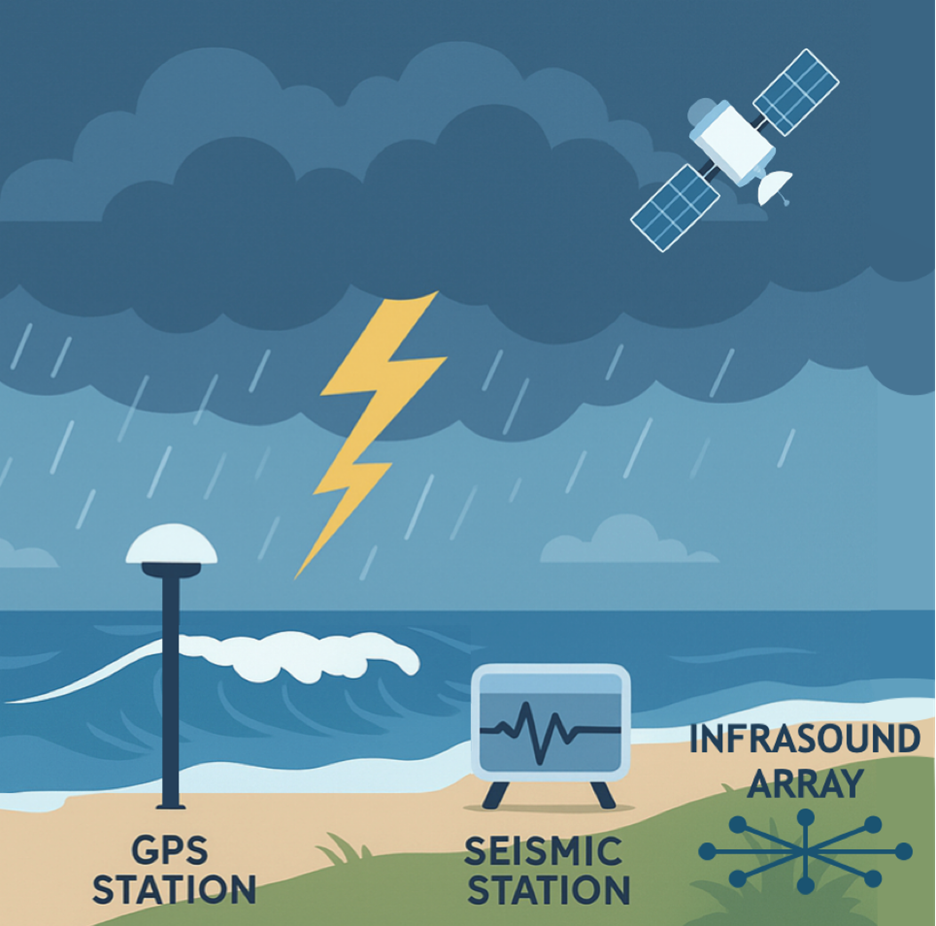
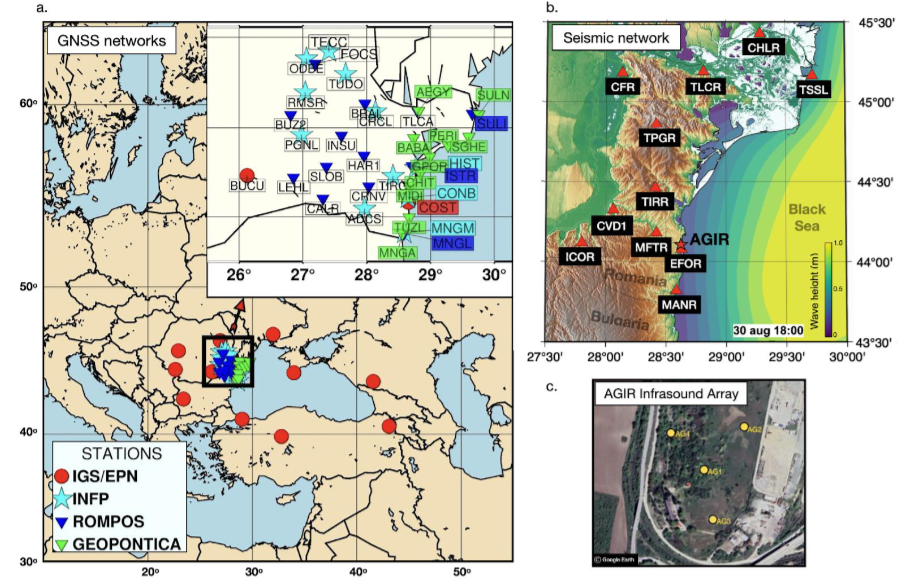
A new REACTIVE study (currently under review at Natural Hazards and Earth System Sciences) presents one of the most comprehensive multi-sensor analyses of the devastating August 2024 Black Sea storm.
The work is available online on the EGUSphere: https://egusphere.copernicus.org/preprints/2025/egusphere-2025-1842/
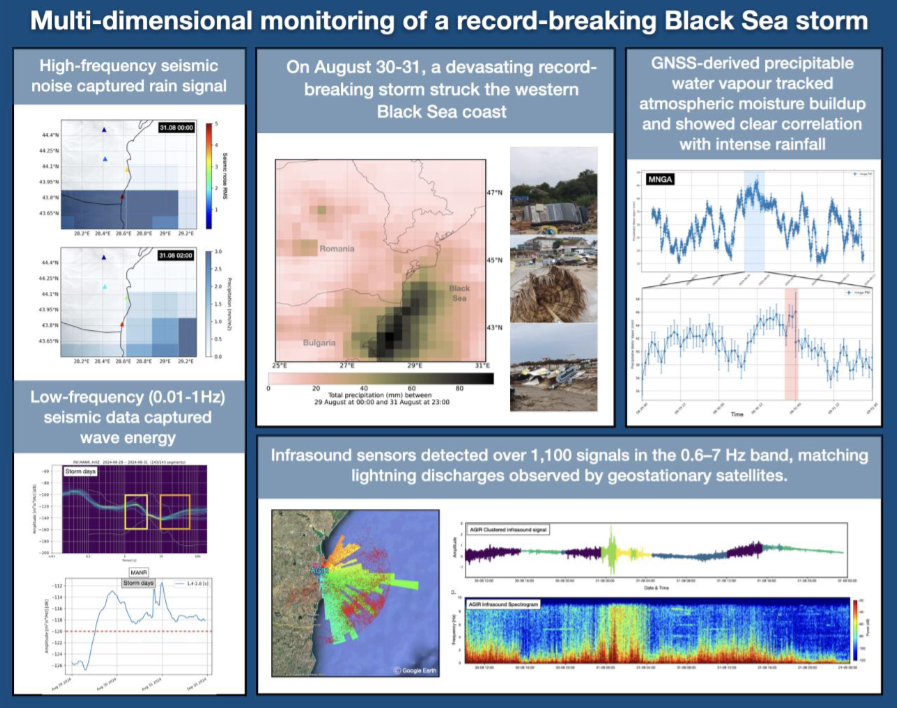
Rather than focusing on a single parameter, the research integrates:
In September 2025, the REACTIVE team presented part of the groundbreaking results at the International Association of Seismology and Physics of the Earth's Interior Conference in Lisbon, showcasing how the record-breaking 2024 Black Sea storm was detected using seismic, GNSS, and infrasound sensors.

Our presentation, “Seismo-acoustic and GNSS monitoring of a record-breaking storm in the Black Sea”, demonstrated how non-traditional geophysical networks captured atmospheric moisture buildup, lightning activity, intense rainfall, and storm-driven sea-state changes - revealing processes invisible to conventional meteorological tools.
Together, the independent observations used for the analysis reconstruct the storm’s full evolution - from pre-convective moisture accumulation to peak rainfall and coastal wave impact.
Why it matters: