

March 1, 2023

Specific objectives of the DTEClimate project:
The specific objectives that will be followed during the project development comprise:
How do we plan to integrate Artificial Intelligence and Earth Observation for Climate Change?
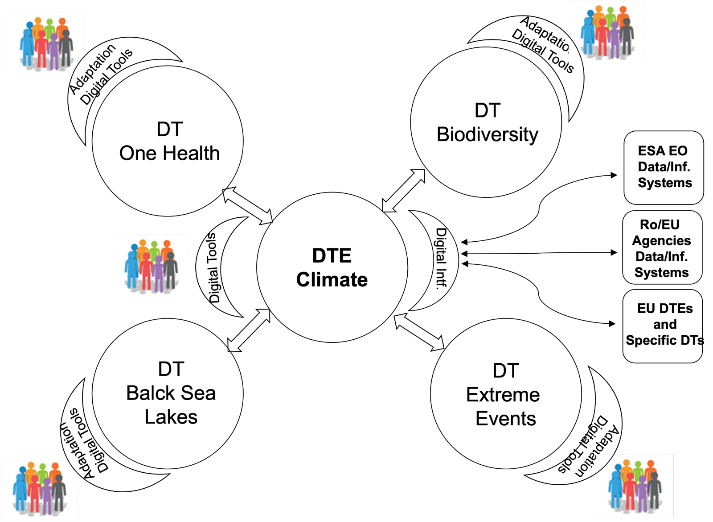
Our project aims to maximize the value of information from Earth Observation (EO) data by extracting sensor information and generating actionable, uniform, and accurate physical parameter layers. The approach is grounded in a cohesive use and joint valorization of sensors in EO, as for example the Copernicus Sentinels, Earth Explorers, and other European Space Agency (ESA) contributing missions. In a Digital Twin system this data should be collected and continuously interpolated on a global scale, achieved through the cohesive and enhanced deployment of multiple EO sensors.
The methodology will focus on time series ingestion to hybrid, physics-informed AI methods for data analytics, prediction, causality discovery, and advanced visualizations. This will allow us to monitor natural and human activity and simulate forecasts in support of sustainable development and resilience to climate change effects.
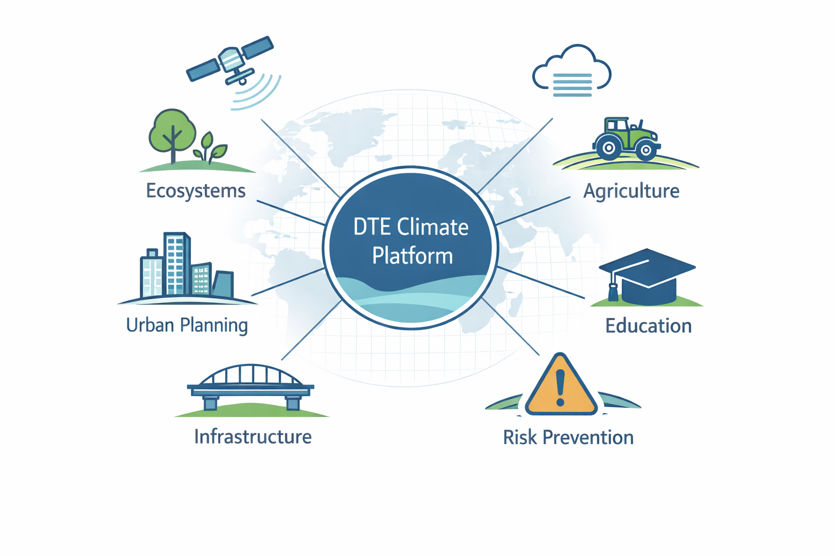
The new methods will be implemented in a system developed by 1 of the specific RDI projects interfaced with the specific models and functionalities developed in 4 other specific RDI projects. The system will be scalable, such that it can be further extended for other domains. The DTEClimate Competence Center focuses at first on the redressment of climate change effects in extreme events, the environment, coastal zones, and health.
Horizon Europe - Mission Adaptation to Climate Change
The "Adaptation to Climate Change” EU mission aims to build resilience by 2030 in at least 150 European communities and regions. Despite the EU's permanent effort to reduce emissions and achieve carbon neutrality, a warmer climate is no longer to be avoided.
Where to find more information and resources on climate change adaptation?
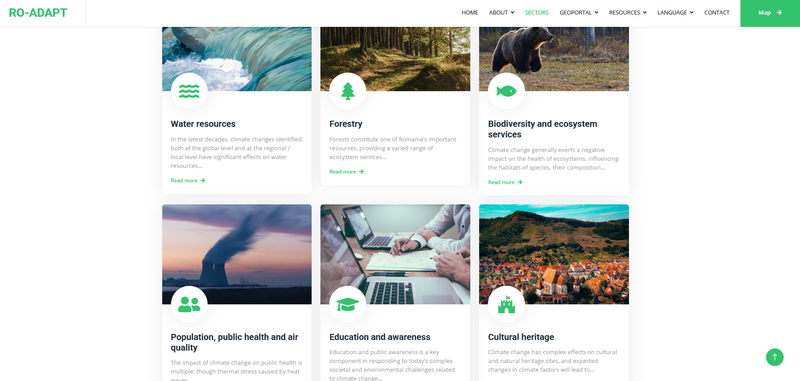
For Romania, check out RO-ADAPT—The National Platform for Climate Change Adaptation, developed and maintained by the National Meteorological Administration
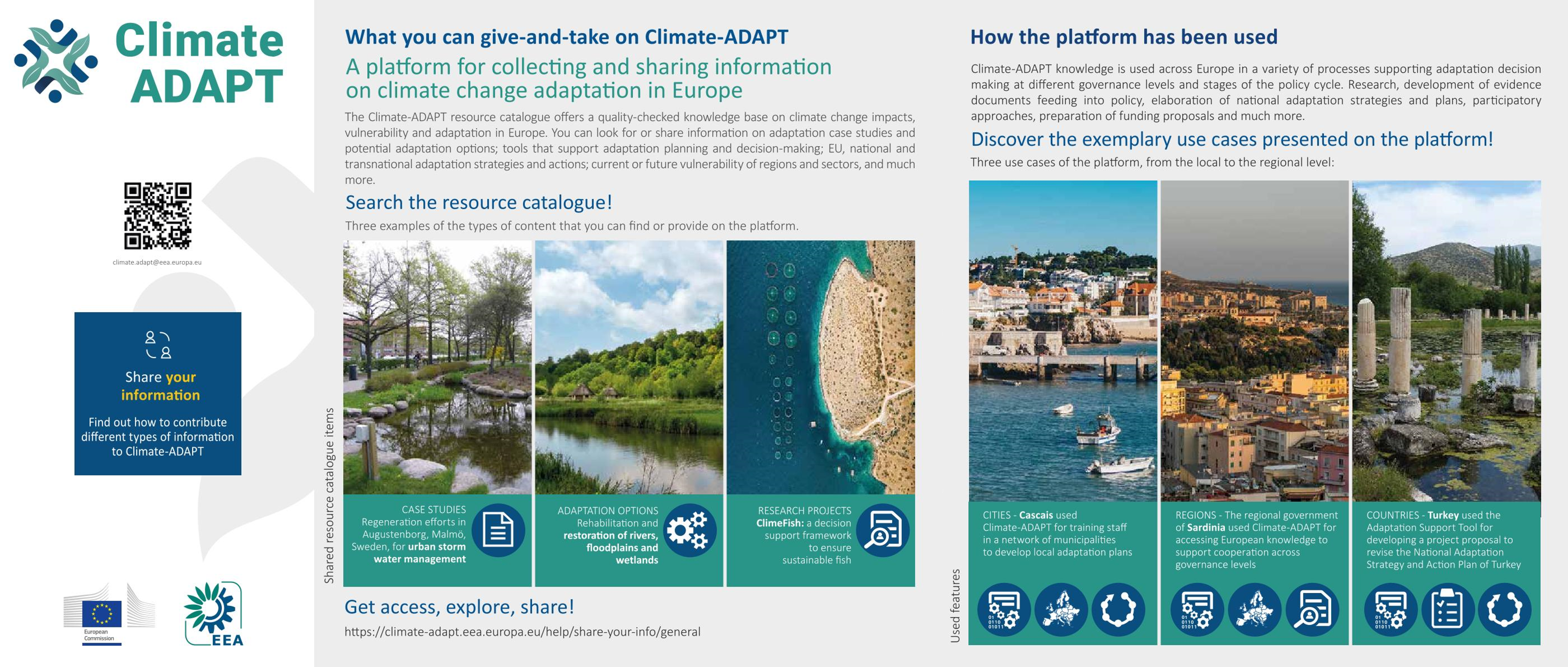
At the European level, the Climate-ADAPT platform presents activities, strategies, and concrete actions for climate change adaptation along with official policy implementations. It is maintained by the European Environment Agency (EEA) in collaboration with the European Commission's Directorate-General for Climate Action (DG CLIMA) and with active support from the European Topic Centre on Climate Change Adaptation and LULUCF (ETC CA)