
News

Recent progress and notable advances in the implementation of DTEClimate and the deployment of digital technologies for environmental resilience

Selected category: REACTIVE
REACTIVE new dashboard: Monitoring and Alert Systems for Extreme Events
A main objective of the REACTIVE specific project is to develop an integrated multi-hazard monitoring service to assess and manage complex risks in Romania

REACTIVE: Climate Signals in Seismic Site Response
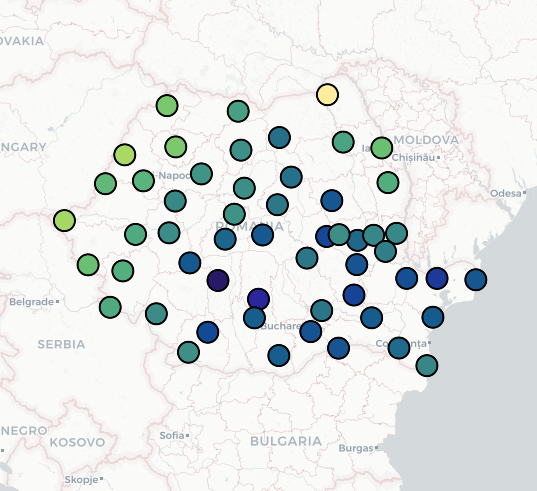
An important advancement of REACTIVE is the integrative use of environmental seismology, where existing seismic networks are used to detect signals related not only to earthquakes but also to atmospheric and environmental processes. Understanding how soil moisture influences seismic response is essential for climate-aware seismic hazard assessment - especially in regions experiencing intensified rainfall patterns.

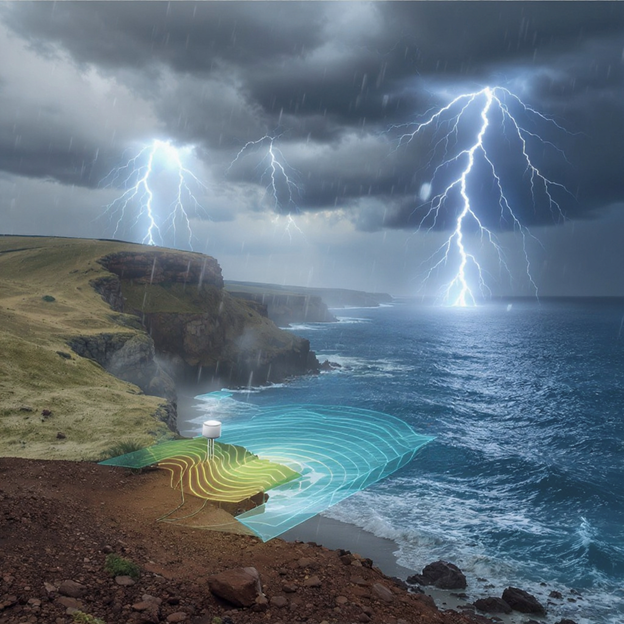
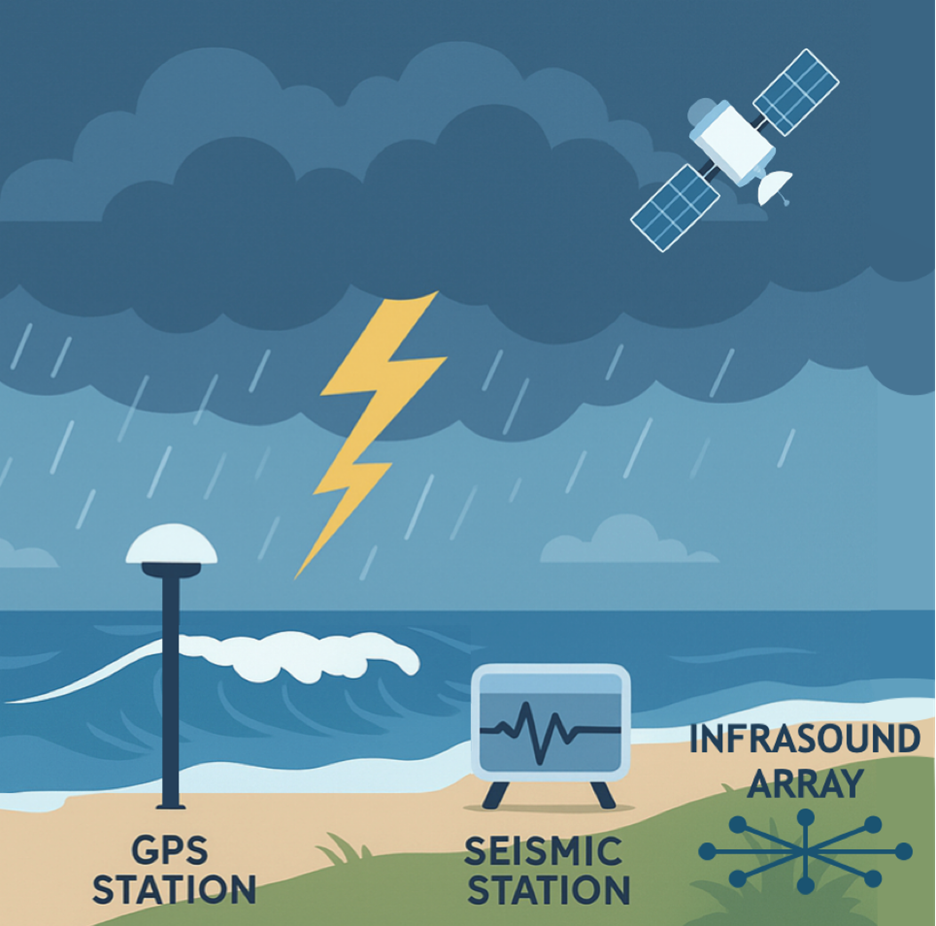
Beyond the Forecast: A Multi-Sensor View of the 2024 Black Sea Superstorm
Extreme weather is not just atmospheric. It is a coupled atmosphere–ocean–solid Earth process. By repurposing seismic, GNSS, and infrasound networks, REACTIVE demonstrates how existing infrastructure can enhance early warning and deepen our understanding of climate-driven hazards along vulnerable coastlines.

EGU2025 Contributions
At the European Geosciences Union (EGU) General Assembly 2025, members of the complex project DTEClimate participated with complementary scientific contributions addressing climate-driven hazards, geospatial intelligence, and ecosystem resilience.

REACTIVE present at the Geoscience 2024 Conference
The REACTIVE team, participated with several contributions in the Geoscience 2024 conference organized by the Romanian Society of Applied Geophysics

REACTIVE: Technical meeting between INCDFP and POLITEHNICA Bucharest
Both teams discussed methodologies for using GNSS data to monitor climate patterns across Romania, focusing on the integration of deterministic signal modeling and stochastic noise analysis to enhance the understanding of geophysical and atmospheric processes.

INFP Extreme Events Citizen Science Platform: Report Weather and Natural Hazards in Real Time
The “Extreme Events” platform https://reactive.infp.ro/events/ was launched in 2024 by the National Research-Development Institute for Earth Physics (INCDFP) as part of REACTIVE – Research Centre for Monitoring Climate Change, Natural Disasters and Extreme Meteorological Events, one of the five component subprojects of DTEClimate.

REACTIVE Project: Kickoff meeting by the National Research and Development Institute for Earth Physics
The REACTIVE project is one of the five component projects of the DTEClimate Competence Center, aiming to develop a comprehensive monitoring service for atmosphere-hydrosphere-lithosphere data. This service will provide, for the first time, an integrated perspective on how climate change-driven extreme events can affect soil structure and critical infrastructures in seismically vulnerable areas.

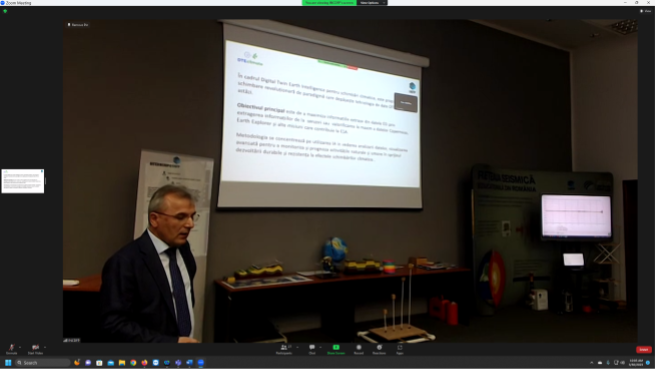
REACTIVE Project: Online meeting in the frame of DT-GEO
Representatives of the REACTIVE project recently participated in an online meeting with Ramón Carbonell and his team from CSIC‑GEO3BCN GeoSciences Barcelona focused on DT-GEO: A Digital Twin for GEOphysical Extremes. This is a major European research initiative developing prototype digital twins to model and simulate complex geophysical hazards such as earthquakes, landslides, tsunamis, and other extreme events.